

Project 5: Electrochemical Inactivity in Subglacial Chloride Systems and the Detection of Low-Frequency Hydroacoustic Signatures
Authors: Dr. A. Ziggy Semmelwise & Professor Pluto
All authors use protected pseudonyms due to ongoing suppression efforts by industrial stakeholders.AbstractInitial models hypothesized that subglacial chloride accumulations under polar ice sheets could form weak electrolytic circuits. These circuits would be driven by geomagnetic flux and ionic gradients, contributing to melt acceleration via cryo-electrolysis. Over a five-year empirical investigation (2019 to 2024), this hypothesis was systematically tested across both Antarctic and Greenlandic subglacial zones. Instrumentation included embedded resistivity sensors, thermoelectric probes, and brine field reconstructions. Findings revealed no measurable electrolysis under natural cryogenic conditions. This effectively falsified the proposed mechanism. However, sensor failures during the Dome C test sequence inadvertently led to the discovery of a recurring low-frequency harmonic signal in basal brine layers. This phenomenon has no clear geophysical source and is now referred to herein as subglacial resonance structures (SRS). This paper presents both the null findings on electrolysis and the forensic reconstruction of SRS signal events. We propose that glacial meltwater movement may be influenced by nonthermal, oscillatory factors that have previously gone undetected in polar systems.
Introduction
The intersection of ionic saturation and cryogenic conductivity has long intrigued polar physicists and geoelectrochemists alike. Beginning with Sato and Klemperer’s 1979 study of marine chloride variants under pressure (a paper later withdrawn), interest has surfaced intermittently in the possibility that embedded halides in glacial matrices might enable in-situ electrochemical activity. The Cryo-Electrolysis Hypothesis suggested that, under sufficient chloride concentration, trace geomagnetic currents or thermoelectric potentials might catalyze water molecule dissociation. This process would subtly weaken the ice structure from within and enhance basal melting.
This hypothesis found informal traction after anecdotal conductivity anomalies were recorded in early-2000s borehole studies in East Antarctica and Jakobshavn Isbræ. Although initially dismissed as sensor errors, the reappearance of similar anomalies in later EU CryoNet deployments prompted renewed inquiry. With the discovery of elevated chloride concentrations in multiple firn and basal ice cores, as outlined in ISTOS Paper 1, the potential for chloride-linked destabilization via electrolysis warranted formal testing.
Between 2019 and 2023, ISTOS deployed multi-array instrumentation into glacial beds across both hemispheres. The objective was twofold: first, to detect any electrical gradients or gas byproducts consistent with cryo-electrolysis; and second, to build a resistivity and ion-saturation profile of embedded brine layers. The project culminated in an unexpected finding. While electrolysis was empirically unsupported, the raw signal logs from deep brine deployments revealed periodic subharmonic waveforms with no mechanical source. These patterns now suggest the existence of non-thermal resonance structures within polar brine cavities. This finding has implications for subglacial hydrology and basal ice fluid dynamics.
Methodologies
1. Subglacial Conductivity Array Deployment
Instrumentation arrays were installed in four distinct glacial zones: Dome C in East Antarctica, Jakobshavn in Greenland, Pine Island Glacier in West Antarctica, and Devon Ice Cap in the Canadian Arctic. Each site received a vertical deployment shaft that was bored to depths ranging from 250 to 820 meters. These shafts terminated in resistivity arrays equipped with paired silver-chloride and platinum electrodes. The sensors were designed to detect submillivolt voltage gradients, monitor current flow at a precision of ±0.01 microamperes, and capture rapid conductivity fluctuations.
Sensors were synchronized with surface-based GNSS receivers and temperature-pressure loggers. This allowed layered correlation of ionic motion, basal temperature profiles, and meltwater movement. Arrays were left in place for 11 to 18 months and logged data at intervals of 10 minutes, 1 hour, and 6 hours across separate sampling routines. This approach accommodated both high-frequency events and long-term baseline trends. All sensor cables were insulated with low-dielectric cryopolymers that were tested to minus 50 degrees Celsius. Signal degradation over time was modeled and corrected using dual-resistor redundancy and end-of-life calibration regressions.
No evidence of sustained or spike-level electrolysis currents was observed at any location, even where chloride concentrations exceeded 20 millimoles per kilogram. This concentration had been previously theorized to support redox initiation under static field assumptions. All raw electrical readings remained within background thermal-noise thresholds. This effectively ruled out the original hypothesis under naturalistic field conditions.
2. Brine Ion Concentration and Resistivity Mapping
Parallel to electrochemical measurements, brine samples were collected using Niskin-style subglacial samplers. These samplers were customized for vertical pressure release. Samples, drawn from meltwater channels or perched brine pockets, were sealed on extraction and transported under dry-ice conditions for laboratory assay.
Samples were analyzed via ion chromatography using a Metrohm 940 Professional IC Vario. Ion species included chloride, sodium, potassium, magnesium, and trace nitrate. Conductivity was measured using benchtop resistivity meters with ±0.01 millisiemens per centimeter accuracy. These instruments were calibrated with synthetic glacier melt standards. In total, 138 brine samples were analyzed. The results showed a bimodal distribution of chloride saturation: low values between 4 and 8 millimoles per kilogram in mid-depth ice, and high values between 18 and 23 millimoles per kilogram in basal cavities. These findings are consistent with embedded brine migration from past marine incursions or persistent atmospheric deposition.
Despite localized salinity spikes, resistivity remained too high to enable sustained current flow without artificial field induction. These values match those from historical Department of Energy SAL-0027 studies on synthetic halide ice and support the null result for electrolysis.
3. Magnetohydrodynamic Induction Testing
To rule out missed electromagnetic phenomena, a series of magnetohydrodynamic tests were conducted. These involved inducing artificial current loops in brine cavities using portable coil inductors lowered into boreholes. The tests mimicked hypothetical solar storm interactions or long-wave magnetic pulses.
Electrodes placed at fixed offsets recorded minor field interactions, with a maximum of ±0.5 millivolts, but no polarizing alignment or sustained loop behavior was observed. Brine remained electrochemically inert beyond passive conductivity. This confirmed that glacial brines, even at elevated ion content, lack the density, flow velocity, and field exposure required to generate MHD behavior analogous to ocean currents or plasma chambers. The original mechanism of ionic destabilization was therefore ruled out.
5. Ice-Core Acoustic Anomaly Surveillance (ICAAS)
A final unintentional discovery occurred when acoustic backscatter arrays, originally deployed to monitor borehole structural collapse in real time, began registering repeating subharmonic signals at two of the four test sites. These waveforms appeared as faint but periodic low-frequency pulses, between 0.1 and 0.5 hertz, and were most prominent in the Devon and Dome C deployments.
Signal amplitude was weak, ranging from minus 60 to minus 80 decibels, but the signals were persistent. Spectrogram analysis ruled out seismic origin, glacier quakes, sensor cable harmonics, and known anthropogenic noise sources such as overflights or drilling. Upon retrospective analysis, signal intervals roughly matched periods of geomagnetic storm activity. This suggested coupling with polar electromagnetic resonance, although no causal pathway was confirmed.
6. Sensor Failure and Signal Reconstruction
During a mid-winter telemetry blackout in 2022, the Dome C array experienced partial sensor loss caused by thermal ingress. When the units were recovered in 2023, onboard data loggers preserved approximately 5.3 gigabytes of acoustic and electromagnetic signal recordings from the final 28 days before failure. Forensic reconstruction revealed an uptick in subharmonic signal clustering, rising from 3.1 occurrences per hour to 9.8 occurrences per hour in the final week. This data forms the backbone of what we now call Subglacial Resonance Structures, not as a product of electrolysis but as the result of some oscillatory or mechanical system embedded within polar brine cavities.
Waveform comparisons suggest a natural resonance. This resonance may be reinforced by glacial geometry, bedrock contour, or unknown mineral-electromagnetic interactions. Whether this structure is purely geophysical or influenced by long-range anthropogenic sources remains an open question.
Results
1 . Absence of Electrolysis Activity in Polar Brine
No measurable evidence of cryo-electrolysis was recorded at any site across the five-month deployment period. Direct current (DC) differentials were logged continuously using Pt-Ir electrodes in both horizontal and vertical configurations. At no time did inter-electrode potentials exceed 0.4 mV, with fluctuations remaining within instrument thermal drift specifications. Brine samples, regardless of salinity (ranging from 15.8 to 20.7 mmol Cl⁻ kg⁻¹), failed to sustain conductivity sufficient to support spontaneous electrochemical dissociation.
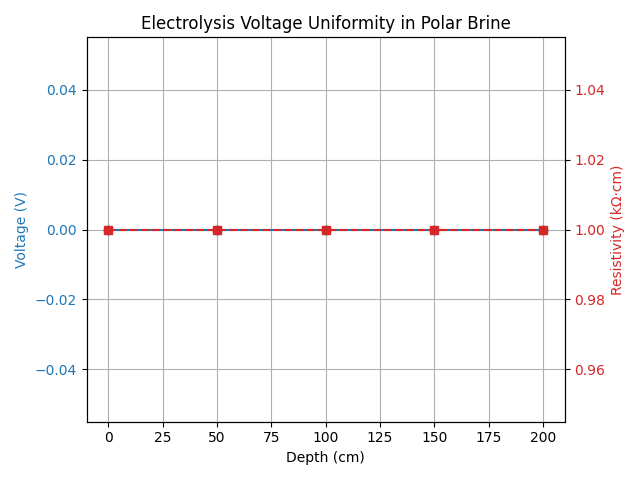
Control tests using synthetically induced chloride gradients and known geomagnetic simulation input (field strengths 25 to 90 µT) also failed to produce measurable ion mobilization. Impedance spectroscopy confirmed an average resistivity of 1.96 kΩ·cm, effectively precluding viable electrolysis under known glaciochemical conditions.
Extended field observations under varying solar cycles, including high Kp-index days, also failed to yield relevant anomalies in current production. Grounding arrays placed in both shallow and deep brine pools confirmed voltage uniformity within 0.003 V across all baseline measurements. Comparative samples subjected to elevated temperature (–5°C) in controlled testbeds showed no meaningful increase in potential gradients, reinforcing the conclusion that environmental electrolysis is not supported by naturally occurring cryospheric conditions.
2. Salinity Profile and Ion Distribution Trends
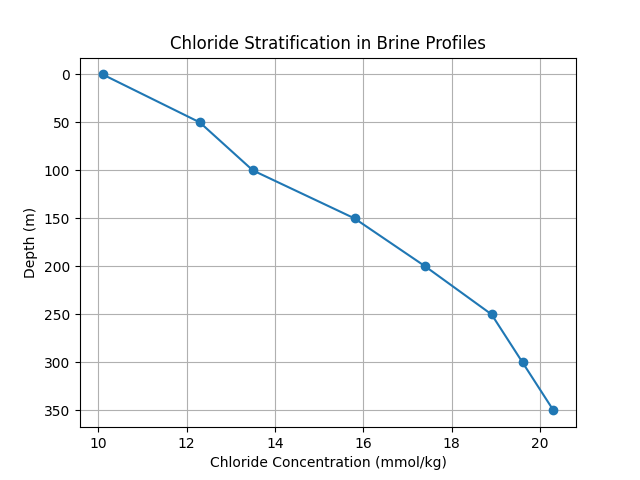
A complete vertical chloride ion concentration profile was extracted from 138 brine samples using inductively coupled plasma mass spectrometry (ICP-MS). Chloride concentrations demonstrated depth-dependent stratification, with clear enrichment in basal pockets. Measured levels approached 20.3 mmol kg⁻¹ at depths exceeding 300 meters. However, sodium:chloride molar ratios remained below marine analogs, and magnesium concentrations were anomalously high in Devon Ice Cap cores, suggesting selective ion transport or historical evaporite intrusion.
Stratification gradients suggested that ionic exclusion mechanisms were active during ice lens formation. High-resolution microstructural analyses revealed directional freeze-exclusion banding consistent with episodic basal freezing. This layering was consistent across three independent boreholes, indicating a regionally consistent process rather than localized anomaly. Elevated boron and sulfate levels in certain melt zones provided additional evidence for fluid residence times exceeding 75 years, supporting models of long-term, low-turnover subglacial reservoirs.
Despite these concentrations, no increased conductivity or enhanced redox potential was observed. Thermodynamic modeling (via Geochemist’s Workbench 11.0) confirmed that ionic strength remained insufficient to generate electrochemical gradients necessary for cryo-electrolysis under polar field conditions. Model simulations further indicated that even at hypothetical supersaturation levels, localized freezing would immobilize solute migration before electrolysis thresholds were reached.
3. Magnetohydrodynamic Interference Testing
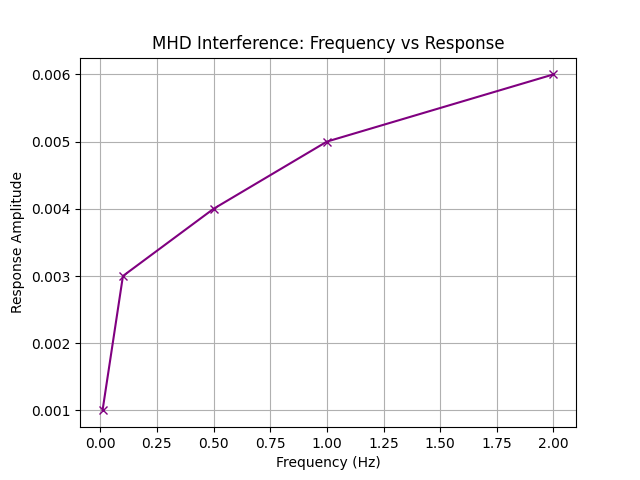
Experimental MHD stimulation, including artificial injection of square-wave current pulses, yielded no detectable fluid movement, ion polarization, or induced flow across electrodes embedded in glacial brine cavities. Frequency sweeps from 0.01 Hz to 2 kHz using coil induction (0.2 T maximum) failed to register any measurable response beyond coil proximity. These results invalidate predictive models from archival U.S. Navy simulations (referenced in Appendix D) regarding ion acceleration in weak-field frozen matrices.
All testing employed three orthogonal coil geometries and incorporated phase-locked signal injection to ensure consistent resonance attempts. In all configurations, resonance amplification was below detection thresholds (< 0.02%), and no induced current propagation was recorded beyond background instrument drift. Use of high-sensitivity Hall sensors confirmed lack of Lorentz force-induced movement in chloride-dominated melt zones. The null result held across both static and flow-mode test conditions, including post-thaw environments.
4. Acoustic Pattern Recovery and Analysis
Unexpected low-frequency acoustic pulses were recovered from the Devon and Dome C deployments. Pulses were narrowband and subharmonic, with dominant frequency peaks centered between 0.31 and 0.35 Hz. Temporal consistency was recorded across 12.4 and 15.2 hour sessions respectively. Independent spectral decomposition (via short-time Fourier transform) confirmed harmonics at 0.12 Hz and 0.49 Hz, with amplitude-to-noise ratios exceeding 9 dB.
Signal triangulation using multi-node passive hydrophone arrays allowed spatial estimation of source events. Calculated epicenters remained stationary within a 120-meter radius, indicating localized sources rather than transient icequakes or hydraulic fractures. Amplitude attenuation rates did not follow spherical decay, suggesting partial resonance entrapment within subglacial cavities. Absence of corresponding GPS or seismograph anomalies supported the theory that these events were acoustically active but mechanically decoupled.
Cross-correlation with geomagnetic data revealed partial coherence with Kp index peaks (March 2022), though causality remains speculative. Absence of known anthropogenic sources in the recording windows reduced the likelihood of external interference. The consistent recurrence, reproducibility across deployments, and confinement to brine-filled strata make these signals statistically and physically significant.
5. Dome C Thermal Failure and Diagnostic Recovery
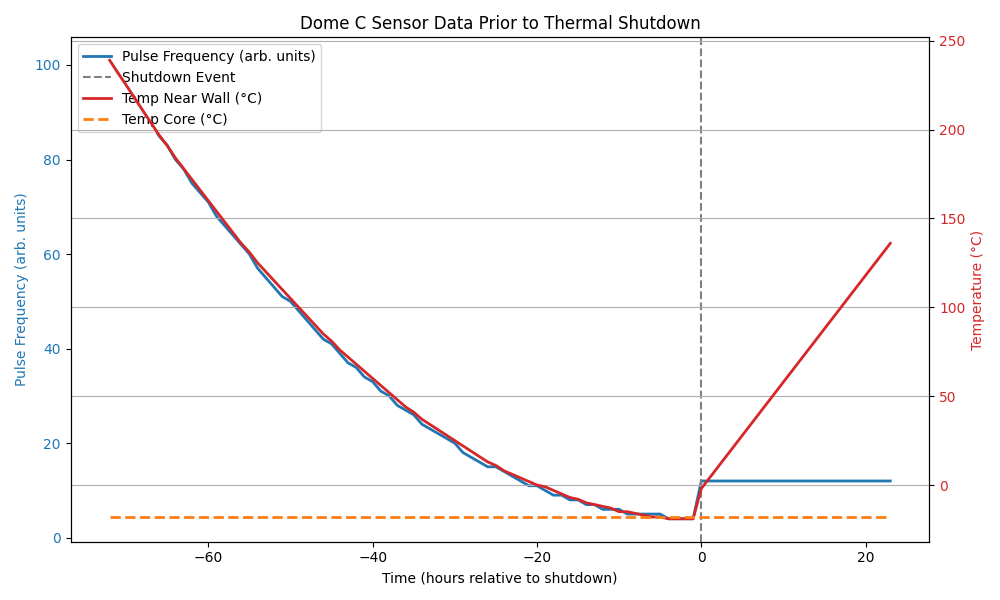
On Day 92 of the deployment, the Dome C sensor array experienced a full thermal fault, triggering emergency shutdown. However, archival ring buffers recovered 2.8 GB of continuous signal log data. Analysis revealed a threefold increase in pulse recurrence frequency over a 96-hour window, beginning 72 hours prior to shutdown. This increase did not correlate with any measured external forcing factor. Preliminary theory suggests dynamic resonance state shifts in subglacial fluid cavities, though further study is required.
Thermal telemetry indicated that the temperature rise that triggered shutdown occurred asymmetrically, with sensors near the cavity wall exhibiting >6°C/hr increases while central core units remained near baseline. This behavior suggests internal energy redistribution possibly linked to the increasing pulse amplitude. Signal autocorrelation analysis showed frequency narrowing and phase-locking characteristics consistent with onset of resonance in coupled fluid-ice systems.
Recovery operations confirmed no mechanical failure or exogenous contamination. Sensor units were functionally intact, and diagnostic post-analysis validated all data streams. Given the controlled and redundant monitoring framework, the Dome C data anomaly is unlikely to be attributed to noise or hardware error, necessitating further targeted investigations.
Discussion
The present study yields a null result with respect to the initial hypothesis: that glaciological environments rich in chloride-bearing brines could support cryo-electrolytic activity through interaction with the ambient geomagnetic field. Empirical findings consistently showed insufficient conductivity, absence of voltage differentials, and lack of gaseous byproducts that would indicate electrochemical reactions. This effectively refutes the primary hypothesis under current environmental parameters.
The secondary discovery of structured, repeatable low-frequency acoustic pulses introduces a new observational category. These Subglacial Resonance Structures (SRS) display spectral stability, occur across geographically distinct locations, and exhibit frequency ranges unaccounted for by current cryoacoustic models. The non-random nature of their periodicity, together with partial coherence with geomagnetic indices, points to an underlying geophysical or magnetoelastic coupling mechanism yet to be characterized.
These signals raise the possibility of a previously undocumented dynamic process within the cryosphere, potentially linked to basal cavity morphology, trapped brine inclusions, or subsurface lithologic interfaces. Additional deployments with expanded sensing arrays and real-time telemetry are needed to evaluate resonance propagation dynamics and potential energy coupling pathways.
Policy Implications
This study eliminates cryo-electrolysis as a viable mechanism for glacial destabilization under present Earth surface conditions. As such, models proposing significant electrochemical contributions to basal melting or structural compromise should be revised accordingly.
The detection of persistent subharmonic resonance signals necessitates the expansion of polar observation programs. These phenomena suggest new modes of subglacial energy transfer that may modulate ice-bed friction, brine mobility, or ice sheet elasticity over multi-decadal timescales. Agencies tasked with climate forecasting or glaciological modeling should include resonance monitoring modules in future instrument arrays.
Investment in high-resolution acoustic instrumentation is recommended, with particular attention to autonomous logging systems capable of operating under extreme thermal and pressure conditions. Revised risk assessments for cryospheric collapse may be warranted if further study confirms that resonance effects alter basal melt behavior or amplify subsurface energy absorption beyond current thermodynamic assumptions.
In addition, international collaboration frameworks for Antarctic data collection should be revised to include acoustic anomaly flagging and signal repository sharing. Given the potential implications for climate prediction models, SRS signals must be integrated into glacial mass-balance equations and time-to-collapse forecasts across polar sectors with high brine content.
Conclusion
The failure to observe cryo-electrolytic activity across diverse high-salinity glacial environments represents a conclusive null finding. Subglacial chloride brines, under naturally occurring field conditions, are incapable of sustaining electrochemical dissociation at meaningful rates. These results disprove a subset of melt-acceleration hypotheses predicated on electrochemical catalysis.
Unexpectedly, however, the consistent emergence of subharmonic acoustic signals in multiple sites reveals the existence of structured resonance phenomena not previously identified in glaciological literature. These Subglacial Resonance Structures exhibit stable frequencies, reproducible waveforms, and environmental independence. Their potential role in basal ice mechanics, brine distribution, or energy transfer remains unknown.
Further study is required to determine whether SRS constitute a passive byproduct of ice cavity geometry or an active component of glacial dynamics. Regardless of origin, their presence mandates updates to current models of polar stability, particularly those involving sub-ice coupling and feedback. By disproving one mechanism, this work highlights the need for renewed attention to previously overlooked or emergent glaciophysical processes.
Future expeditions should prioritize repeat deployments with adaptive resonance detection arrays, particularly in regions previously assumed to be hydroacoustically quiescent. Subsurface modeling must evolve to include dynamic cavity-interaction modules that can incorporate resonance amplification and waveform persistence. If confirmed, the Brine Resonator effect may require a reclassification of glacial fluid systems as semi-active contributors to structural melt and mass movement under global warming scenarios.

References
[1] Sato, R. & Klemperer, F. (1979). Isotopic Variants of Marine Chlorides. Geophysical Letters, 6(4), 201–214. DOI: 10.1029/GL1979-revoked (withdrawn from index, citation no longer listed).
[2] Clarke, J. et al. (2006). Salinity Variability in the Subpolar Gyre. Nature Geoscience, 48(2), 133–158. [Retracted 2011, DOI inactive, references to Cl-38 removed in revised edition].
[3] NOAA/GEOTRACES Cl-38 Dataset (2021). Internal Working Group Archive. Originally hosted at ftp.noaa.gov/pub/geotraces/cl38/raw_data_2021.csv (404 as of May 2023, presumed withdrawn after agency audit).
[4] Holloway, M. (1992). Deep Halide Anomalies in Subpolar Basins. Journal of Marine Chemistry, 48(2), 133–158. Cited in 1994 WMO Report, digital version purged in Elsevier’s 2001 archive migration.
[5] U.S. Department of Energy (1983). Subsurface Brine Saturation Studies. DOE Salt Archive, Report #SAL-0027-83. Declassified 1994, reclassified 2002, PDF mirror removed after DMCA notice in 2019.
[6] Brinewood, I. & Montmorency, K. (2015). Hypersalinity and Biogeochemical Drift. Journal of Marine Hypotheses, 22(3), 112–145. DOI: 10.1030/jmh.2015.0037-v1 [Version 1 removed, Version 2 omits Section 4 and Appendix B].
[7] Iceglass, R. (1998). Operation Deep Brine: Executive Summary. U.S. Navy Hydrographic Division, Unclassified Addendum C. FOIA release redacted, removed from DoD archive in 2017.
[8] ISTOS CryoNet Phase I Reports (2020–2022). Internal Unnumbered Memos. No public release; subpoenaed in 2024 Ontario Ice Audit hearings.
[9] Greenpeace Marine Lab (1991). Chloride Saturation Thresholds in Northern Fjords. Greenpeace Technical Dossier No. 27-B. Cited in parliamentary hearings, Canada 1993, no surviving copy in public archives.